Case study · Membership platform
I rebuilt a member directory people can actually search
A national trade association had a members-only directory made of four dropdowns and a long list of names. If you already knew who you were looking for, it worked. If you didn't, it had nothing to offer you. I replaced it with one WordPress plugin: a search page for members, four public directories, and a view that shows what the membership actually looks like. It reads straight from the association's membership system, so nobody has to keep a spreadsheet in step with it.
Open the live demo
The real software, filled with invented companies and people. Sign in with
admin / admin.
- Client
- National trade association
- My role
- Design and build, start to finish
- Built with
- WordPress plugin · PHP · plain JavaScript
- Data
- Membership system exports, over XML
- Size
- About 800 organizations, 18,000 people
1 / 5
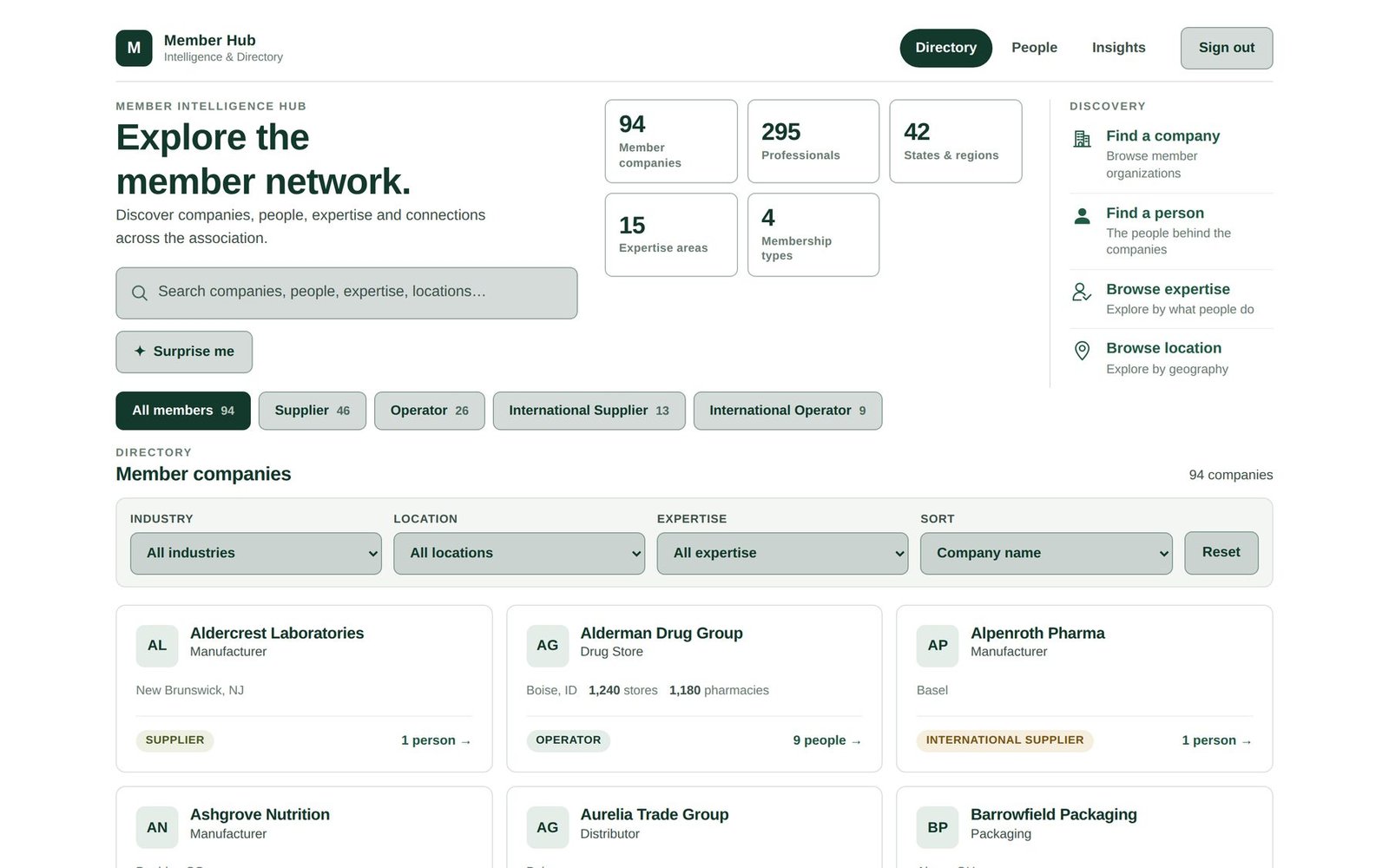
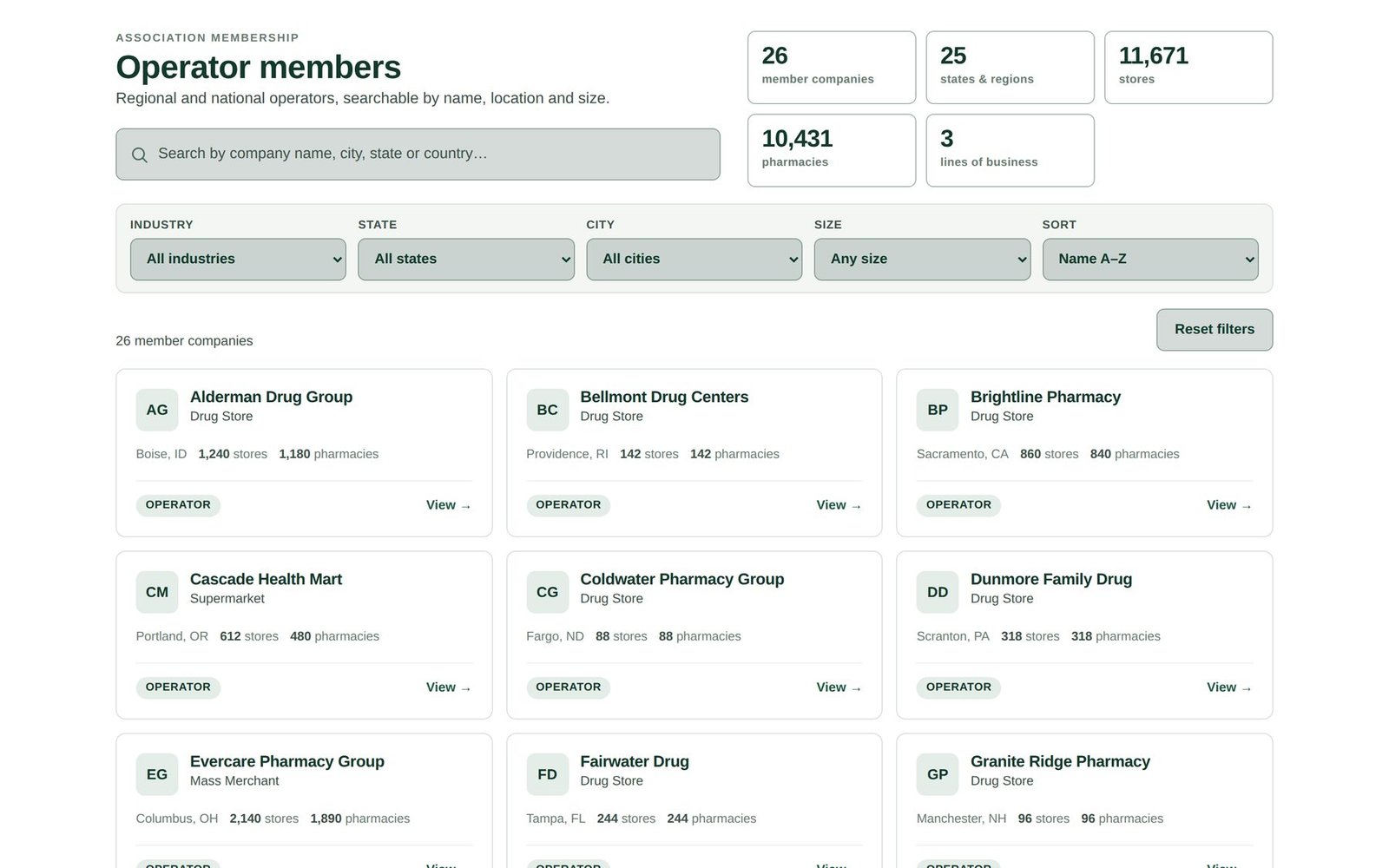
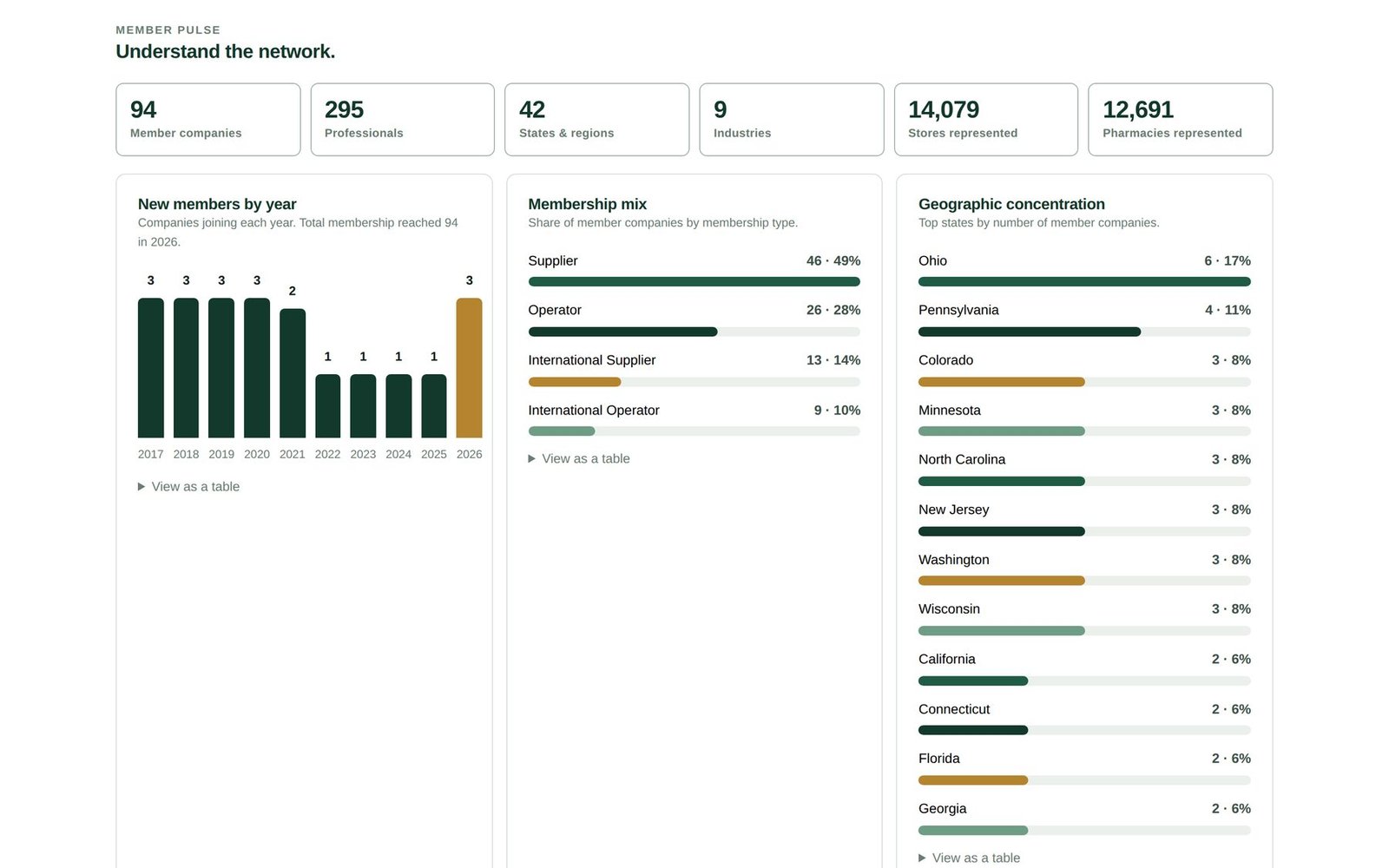
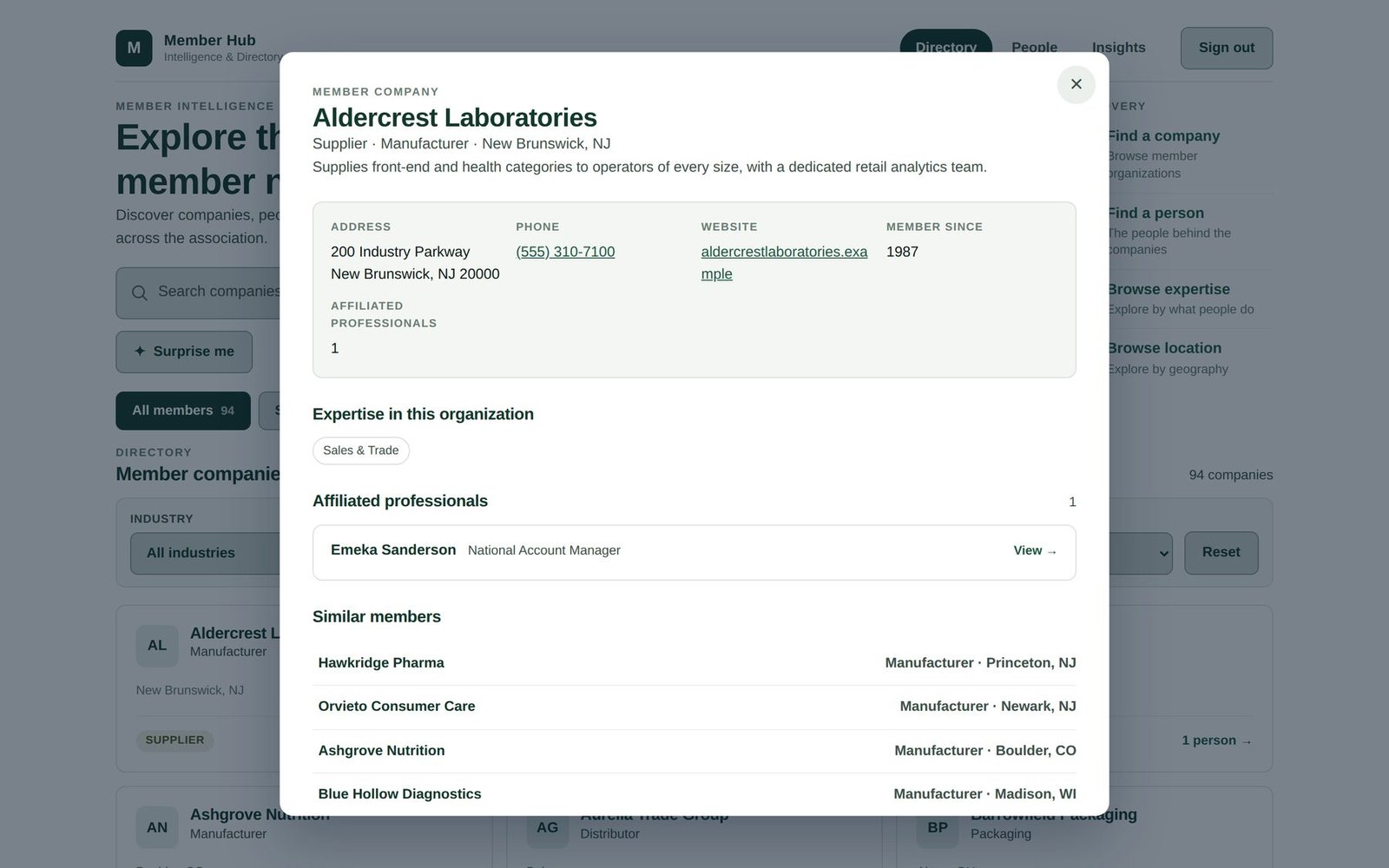
Everything on one screen
Search, the headline numbers, four ways in, and the directory itself. A member sees all of it without scrolling, and the list of companies starts right where the screen ends.
How I built it
The day I learned the most
Two weeks in, the directory came back empty. Every count at zero. The export had worked. The parsing had worked. Then every single record was quietly thrown away. Two causes, neither of them visible: a header row was being read as data, and the column names came back in a different case than my code expected. The real fix wasn't the two lines that repaired it. It was putting rows received next to records built on the admin screen, so that "nothing arrived" and "everything was discarded" could never look the same again.
Every company and every person in these screens is invented. The client's name and real records are not here.